
The Life of Aglaé, the Little Olive in the Sun
Birth of an Olive
The Aglandau olive is a variety that is born under the bright sun of Provence. Its name comes from its shape, which resembles a little acorn - Aglà in Provençal. It grows at the slow pace of the seasons, swayed by the Mistral wind and nourished by dry, stony soil.
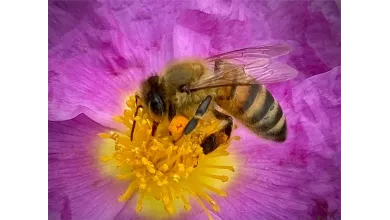
In spring, the olive tree is covered with white blossoms. Bees come to forage on them when the weather is fine. Then appear small clusters and tiny green spheres. The branches are filled with them. Half of them will disappear during bad weather.
Aglaé's First Season
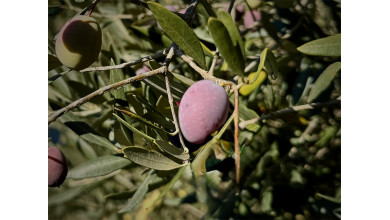
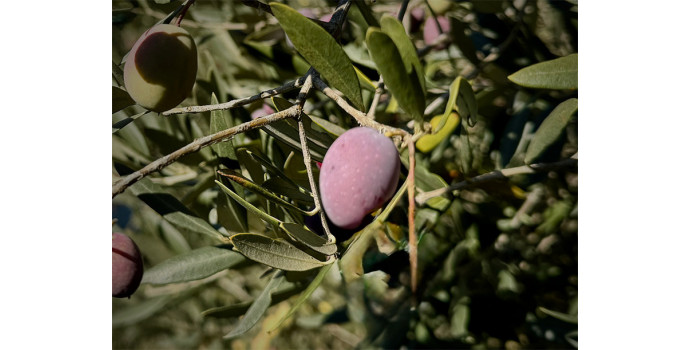
Aglaé peeks out, surround by other little olives. Then come the periods of rain and hail. Our little Aglaé holds on as best she can. She watches her companions gradually disappear. Half of them have been swept away by the Mistral wind and the rain. The whims of the weather fade at the end of spring. In the trees surrounding the olive grove, bird nests appear, soon to reveal hungry little chicks.
Sweetness of a Beautiful Summer
The beginning of summer has arrived and Aglaé ripens slowly under the sun, surrounded by birdsong, the flutter of butterflies' wings and the low, comforting hum of passing bees. The small stems of te cluster thicken and Aglaé gently grows. Warmth gathers within her and her skin stretches to reveal a proud, plump green olive.
The chicks grow and their playful squabbles can be heard. Soon it will be time for their first flight and Aglaé is a witness to the beauty of the nature she so admires. All summer long she is cradled by the sunlight, which makes her even more beautiful and round. She soaks up all the goodness she will one day offer when she is ready to be harvested. The soft, starry nights make her happy. She gladly chats with her sisters. There are now five of them on the same branch. Their tree is laden with olives. The season looks promising - what joy!
Sunny Autumn
The chicks have definitively left their nests. The days grow shorter and the sun - though stil present - becomes more discreet. The nights turn cool. Aglaé begins to take on darker shades, first deep green and then shifting to a violet hue. She still has a good month ahead before reaching maturity. She savors every moment that nature grants her. The autumn rains are approaching. Soon, she will offer all her flavors of green fruitiness, with a touch of bitterness and pepper and she will mingle with other olives before being enjoyed.
On a beautiful Novembre day, a small van and a little truck arrive. About thirty pairs of hands get to work. Large green nets are carefully laid out between the trees.
The pickers gather the olives that fall into the stretched nets. Some people are equipped with electric combs, shaking the branches so the olives drop. This requires careful pruning of the trees beforehand and a great deal of skill. Aglaé and her companions bid farewell to the olive tree and fall into the net.
They are gathered and placed into large bins, then taken to the mill. Aglaé knows very well what comes next. She contributes to the making of the olive oil "L'Or de Provence".
The olives are sorted, washed and quickly pressed to prevent fermentation. The crushing is done with the pits.
The kneading is done cold (below 27°C). Kneading or mixing consists of slowly stirring the olive paste in a stainless steel tank for about 20 to 45 minutes at a controlled temperature.
The extraction is carried out by centrifugation, meaning the olive paste is sent into a horizontal centrifuge called a decanter. Thanks to centrifugal force, the elements are separated by density. The lighter olive oil naturally rises to the surface, while the pomace (solid residues as fragments of pits, skin and pulp) is removed.
The extracted oil may still contain a bit of water. It then passes through a vertical centrifuge which refines the separation and produces a clear, pure oil ready to be stored before bottling.


Thyme/Rosemary Olive Oil 50 cl
Thyme and rosemary crushed with the olives to magnify roasts,...
- Online only
